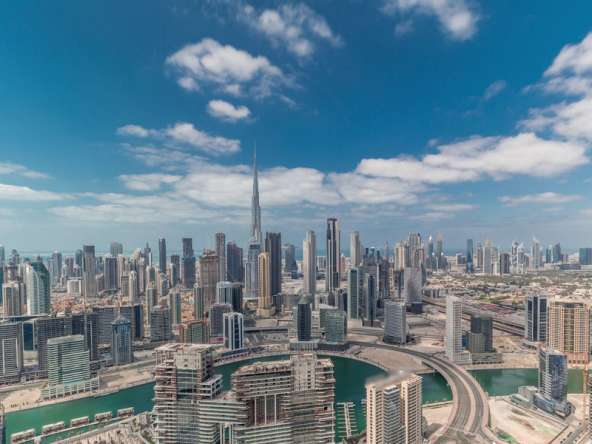
The transformation of Dubai over the past two decades has been nothing short of amazing. It has obviously put out its stall for the well-heeled traveller wanting a familiar world with a more exotic passport stamp with its “world-class” airline, “world-class airport,” and an expanding number of high-end, high-rise hotels and malls.
The spectacular of the seven emirates, Dubai, offers sumptuous grandeur, state-of-the-art comforts, and old-world charm. The dazzling emirate, which stretches along the Arabian Peninsula’s eastern coast, is well known around the world as the thriving hub of international trade and innovation. The little powerhouse emirate has the ability to draw people in thanks to its vigour, optimism, and welcoming demeanour toward individuals from all over the world. Foodies are drawn attracted by the incredible variety of authentic world cuisines. The heart-pounding thrills are completely endless for adventurers.
Superlatives like “first, tallest, deepest, most expensive, extravagant, outlandish, and most lucrative and financially rewarding” fit perfectly in the sparkling metropolis. Where else could you stay in a seven-star hotel, visit a collection of 200 artificial islands designed to resemble other countries, or climb the tallest structure on the planet? Dubai has a lively, multinational vibe, especially when a multiracial kaleidoscope of tourists passes through. And the glitzy tale does not end here; the metropolis is all set to stretch its wings further as it decides to launch phase 2 of the Dubai 2040 Urban Master Plan – A key to bringing ideas to life.
Phase II – The emirate flapping its wings to add more superlatives to its list
As previously mentioned, the following phase includes a comprehensive and thorough plan for the development of Dubai’s five primary metropolitan centres—three of which are currently present and two of which are brand-new. In order to bring Dubai’s real estate market into accordance with the Dubai 2040 Urban Master Plan’s requirements and achieve a balance between supply and demand, the plan also outlines a comprehensive strategy for it up to 2040. In order to manage prospects and developments in the real estate market, achieve sustainable urban growth, and boost investor confidence, proactive steps are required.
The second phase of the Dubai 2040 Urban Master Plan establishes a framework for high-yield farming and agriculture by selecting suitable locations and building the facilities and infrastructure required to ensure food security. As part of strengthening the emirate’s identity, promoting historic neighbourhoods, structures, and attractions, and enhancing the tourism experience at archaeological sites, Phase II also lays out measures for protecting urban heritage.

The Dubai 2040 Urban Master Plan also recommends creating a city where people may travel anywhere in 20 minutes or less on foot or by bicycle. In order to provide citizens with access to most of their daily requirements and destinations within 20 minutes, the project entails creating integrated service hubs with all the required facilities and increasing the population density around mass transit stations.
A thoughtful and systematic strategy will also be devised to improve urban areas like squares, places under bridges, and alleyways by adding well-being components to make them more enticing and calming for locals and visitors. The initiative helps enhance the beauty of urban areas, create green spaces, reduce carbon emissions, and enhance landscaping methods. The main focus of a comprehensive strategy for soft mobility for pedestrians throughout the golden emirate will be connected walkways in densely populated areas.
Phase II of the master plan focuses on creating an avenue that connects each residential neighbourhood. In order to do this, a location within a residential neighbourhood must be chosen and built under the integrated street network idea, with amenities and services catered to the community’s needs.
Expected benefits to be reaped
The Supreme Committee of Urban Planning in Dubai has fulfilled six projects with the assistance and direction of Dubai’s government, one of which was the National Housing Policy. As a result of the policy, a historic housing budget of $17.7 billion (AED65 billion) was set aside, expanding the population of Dubai who would benefit from its housing programme. The area of the real estate plots set aside in Dubai for national residences expanded to 1.7 million square feet.
One of the fulfilled goals was launching the Hatta Development Master Plan to enhance welfare.
The strategy aims to improve tourism in Hatta, boost regional tourism, attract investment, strengthen partnerships with the business sector, safeguard cultural and natural resources, and give locals investment opportunities.
In order to facilitate sustainable development in keeping with the objectives of the emirate, the measures were also completed by authoring the Urban Planning Law and developing an integrated planning database. One of the projects was the Dubai Countryside and Rural Places Development Master Plan. It attempts to satisfy the needs of both residents and visitors while protecting the natural beauty of those regions. The policy intends to enhance the well-being of locals and visitors in addition to providing a distinctive tourism experience and making Dubai’s countryside one of its main tourist attractions.
The Supreme Committee of Urban Planning expects to finish the Dubai Wellbeing Strategy and a project to extend Dubai’s public beaches, among the other five projects. The projects that will be completed the following year include a plan for integrating land consumption and use and transportation policies, directing development in coastal areas and lengthening beaches, a landscaping policy, developing a plan for sustainable mobility, doubling the number of public parks and recreation areas, and developing a plan for the environment and sustainability.
Dubai – The safe haven
The Dubai 2040 Urban Master Plan was approved by Sheikh Mohammed bin Rashid Al Maktoum to make Dubai the best city in the world to live in.
As a result, the city’s urban infrastructure will be substantially modernised, focusing on five significant metropolitan centres. Historical emirate neighbourhoods like Deira and Bur Dubai have museums, conventional and modern markets, and antebellum homes that highlight its tradition and past. The city’s economic and trade hub, which supports a range of commercial and financial operations, comprises Sheikh Zayed Road, Business Bay, Downtown, and the Dubai International Financial Centre.

The tourism and entertainment platform supports various commercial and recreational activities, including the Dubai Marina and Jumeirah Lakes Towers.
The two new centres are the Dubai Silicon Oasis Centre, a scientific, technological, and knowledge hub that promotes innovation, the development of the digital economy, and the recruitment of fresh talent, and the Expo 2020 Centre, a hub for the exhibitions, tourism, and logistics industries.
The new Dubai 2040 Urban Master Plan ensures that all city citizens have equitable access to all facilities, services, and opportunities to create an integrated plan for the growth of urban regions. The plan specifies six stages of urbanisation that serve the community in a variety of functional and residential capacities.
It would be possible to determine the infrastructure requirements for Dubai’s districts based on these six levels, including energy, roads and transportation systems, governmental services like hospitals, schools, service centres, and service and recreation facilities, in a way that promotes the use of flexible and sustainable modes of transportation.
More proposals call for expanding food production inside the municipal borders. The government has already made investments in businesses that grow food vertically. The authorities have a clear plan for the growth of Dubai’s housing market and urban infrastructure through the year 2040, according to Sheikh Mohammed. The objective is for Dubai to have high output from urban agriculture, be pedestrian- and eco-friendly, and be a metropolis.
New housing options with affordable rental rates
In a period of skyrocketing rental costs and a sales boom, the plan would ensure that supply and demand are balanced in the real estate industry. According to a survey from September, the average yearly rent for a villa in Dubai rose to AED268,758 after prices increased 26% year over year, while the average cost for an apartment increased 27% to AED89,986. To handle opportunities and changes in the Dubai real estate market, increase investor trust, accomplish sustainable urban growth, and the strategy “calls for aggressive steps. The plan’s first phase, which was presented last year, comprises sizable new housing developments in Silicon Oasis, a business park and residential region south of Dubai International Airport, as well as in Dubai South, close to the Expo City site and Dubai World Central airport.
Urban farming with high yields
The strategy advocates for high-yield agriculture and farming by choosing appropriate land and sites and creating the facilities and infrastructure necessary to guarantee food security. Phase II also contains measures for protecting urban history to strengthen the emirate’s identity, promote historical districts, landmarks, and structures, and improve the tourism experience at archaeological sites.
Constructing a 20-minute city
The master plan also aims to create a community where residents can travel 20 minutes on foot or by bicycle to get where they need to go. In order to give inhabitants access to 80% of their daily requirements and destinations within 20 minutes, the project entails building integrated service centres with all the required services and expanding the population density surrounding mass transit stations, according to the research.

The best examples are seen to be Melbourne and Paris, where public transportation, shopping areas, and schools are all located close together. The plan outlines initiatives to improve and use urban areas, including alleyways, places under bridges, and squares, “by enhancing the components of well-being to make them attractive for residents and visitors.” It describes other initiatives to accommodate walkers, cyclists, and scooter users.
Plan for Dubai beach and Hatta
The Hatta Beach Project will open up new investment prospects for the region’s private sector. The current lake and dam in Hatta will be developed into an adventure destination in the upcoming years. Work on this project has already begun. The Mamzar and Jumeirah beaches in Dubai are currently being expanded further along the shore.
Five urban centres
The proposal is based on simplifying five existing metropolitan centres. These include Deira and Bur Dubai in the ancient city, which will serve as focal points for museums and traditional marketplaces and highlight the city’s history. Downtown Dubai, Business Bay, and Dubai International Financial Centre serve the city’s commercial and financial operations. And two other popular tourism and entertainment destinations are Dubai Marina and Jumeirah Lakes Towers. The five zones are composed of Expo City and Silicon Oasis.