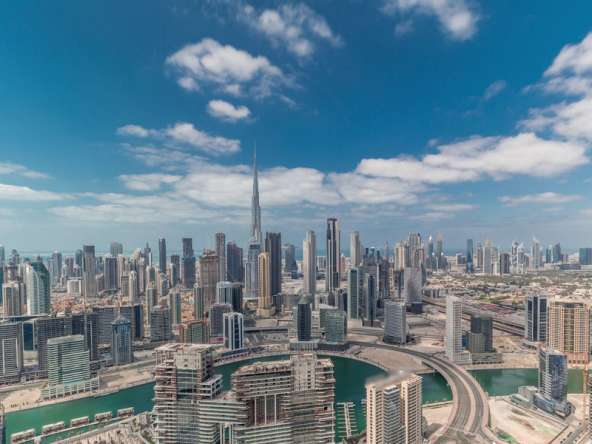
Dubai is a desert wonderland. It has developed from a modest trading outpost to one of the world’s most iconic cities in just 50 years. Epic structures like the Burj Khalifa and crazily ambitious constructions like The Palm bear witness to a city obsessed with the new, the fast, and the seemingly impossible. There is nowhere else exactly like it, with a long Bedouin heritage and an attraction that draws in people from all over the world.
In December 1971, Dubai and its surrounding emirates formed the United Arab Emirates (UAE). No one could have predicted its evolution at the time. However, the discovery of oil beneath the region meant that unimaginable riches were about to transform what had been a quiet corner of the Arab world for centuries, with a population of only 86,000, into something altogether more modern, a science-fiction take on what a city could be, with nearly three million residents. To understand how Dubai rose from the desert to become a worldwide powerhouse, it is necessary to leave the towering structures and sandy beaches behind because its modern history begins with the simple wooden dhow rather than glass and steel.
Dubai real estate – A flourishing investment sector
The emirate has flourished well! Dubai real estate sector has flapped its wings and has set new benchmarks of growth. Now the princely sands have been crowning for the cryptocurrency, playing for the metaverse and reaching up for the stars! Following the decision to establish a dedicated International Direct Investment (FDI) Unit in the UAE, Dubai’s position as one of the world’s most attractive destinations for foreign investors is expected to be improved even more. Several development initiatives, including the Dubai Urban Master Plan 2040, which is entering the second phase, Dubai Economic Agenda D33, The Future 100, Foreign Direct Investment, and others, have been launched in response to a directive issued by President Sheikh Khalifa bin Zayed Al Nahyan earlier this month encouraging the promotion and development of the UAE’s investment environment in order to attract foreign capital to the Emirates.
The UAE government to develop and control FDI Unit

The UAE Ministry of Economy will develop and control the FDI Unit. The agency’s initiatives will include creating and maintaining a database of UAE projects attracting international investment and those in the pipeline. It will also strive to standardise and implement procedures to make it easier for foreign investors to enter the emirate. According to the property agents in Dubai, this is going to turn out quite well for Dubai real estate sector and has satisfactory answer to why you must invest in Dubai. According to a statement made via the UAE government news agency, WAM, licenced foreign investment businesses would be afforded the same status as national companies, within limits permitted by the legislation in place in the UAE.
The move is fantastic news for Dubai, which is regarded as one of the world’s most popular FDI locations. According to figures released by the Dubai Investment Development Agency, an agency of the Department of Economic Development, FDI in Dubai increased by 26% in the first half of 2018 to $4.84 billion, compared to the same period in 2017.
Notable increase in FDI Projects in Dubai
Meanwhile, the number of FDI projects in Dubai has risen to 248, representing a 40% increase over the same period last year. Dubai was ranked fourth in greenfield FDI projects in 2017, tenth in FDI capital flows, and fifth in FDI reinvestment projects in 2017. The increase in FDI money and projects strengthens Dubai’s position as the preferred global destination for global corporations and startups seeking growth and expansion. It clearly demonstrates investor confidence in the Dubai real estate and economy.
The Dubai FDI data revealed that 43% of all FDI projects in the first six months of 2018 contained medium- to high-technology investments, providing optimistic indicators for Dubai’s quest to become the world’s smartest city by 2021. Since 2015, investors from the European Union and the United States have launched 355 and 213 high-tech projects in Dubai, respectively, totalling $5,738 billion and $3,990 billion in capital investment. Dubai’s Smart City initiative has seen the emirate invest extensively in the construction of intelligent infrastructure ranging from self-driving cars to government e-services that use artificial intelligence (AI) and robots.
The goal is for all city services and amenities to be available on cellphones, and the authorities seek to improve everyone’s quality of life. Foreign investors have expressed interest in these programmes. According to the Financial Times FDI Markets Data & FDI Benchmark Study, 60% of total Capex FDI in Dubai benefited the city’s medium- and high-tech sectors, earning the emirate the world’s top rating in terms of FDI in technology transfer linked to AI and robotics in 2018. Dubai is leading the world’s cities in artificial intelligence adoption to serve humanity and construct a worldwide model of the city of the future, as the authorities aspire to become the world’s largest laboratory for technology and research and development (R&D).
Rolling out THE PLAN
As a result, Dubai launched a staggering $8.7 trillion economic plan for the next decade, aiming at bolstering trade, turbocharging foreign investment, and its status as a worldwide hub. According to Dubai’s ruler, the Golden Emirate will rank among the top four global financial centres, with FDI increasing to over AED 650 billion ($177 billion) during the next decade. Through this initiative, over 300,000 global investors will help Dubai become the world’s fastest developing city. The tweet went on to detail a few of the 100 future revolutionary initiatives specified in the ten-year economic roadmap. These include growing foreign trade to AED 25.6 trillion from AED 14.2 trillion in the previous decade, virtually tripling annual foreign direct investment to AED 60 billion, and increasing government spending from AED 512 billion to 700 billion in the following decade.
What will be the future strategy?

The strategy also intends to increase private sector investment from AED 790 billion in the previous decade to AED 1 trillion in the upcoming years. It has guaranteed AED 100 billion in yearly contributions to the economy via digital transformation projects. Dubai intends to double its economy in the next ten years and become one of the top three economic cities in the world.
The ambitious Dubai
The announcement came just a few days after Dubai announced the repeal of its punitive 30% alcohol tax, a move aimed at stimulating tourism and business. In recent years, the emirate — the oil-rich United Arab Emirates’ flashy commercial and tourism hub — has implemented a flurry of reforms to make it more appealing for foreigners and multinational firms to reside and invest. The city’s economic goals may raise some eyebrows, but finance experts and property brokers in Dubai believe they are attainable.
The aims are ambitious. However, given Dubai’s economic history and track record of reform, there is little reason to distrust them. According to the experts, the problem is that neighbouring Saudi Arabia is investing trillions in shedding its closed and conservative image and attracting tourism and global investment. They say the figures are unrealistic, but Dubai has never been short on ambition. As neighbouring countries such as Saudi Arabia open up and want more regional business, Dubai is raising its ambitions and aiming to be a global hub.
Dubai – A regional hub
Dubai has been a regional hub for the Middle East, but it has recently undertaken reforms to better integrate with the world. It has a diverse 90% expatriate population and has long offered lifestyles akin to those found in the Western world, including beaches, zero income tax, and one of the world’s lowest crime rates. To align with the rest of the world, the UAE recently converted its Islamic weekend of Friday-Saturday to the Western weekend of Saturday-Sunday. It began offering a remote worker visa programme during the coronavirus outbreak as more people adopted a remote work lifestyle.
Due to an early vaccination roll-out for its whole population in early 2021, Dubai was able to return to ‘normal life’ during the pandemic much sooner than most other areas, attracting new influxes of residents and visitors. Dubai real estate sector is thriving, and the emirate was recently named one of the top 10 finest cities in the world for expats to live and work. As much of the globe prepare for a bleak and gloomy 2023, with forecasts of widespread recessions, high energy costs, and poor economic development, people at higher authority believe the Gulf states will thrive, bolstered by still-high oil prices and spurred by a desire to diversify their economies. They believe that the GCC is in a Golden Age. As a result, its economies have never been richer, stronger, more diverse, or more integrated into the world economy.
Key Aspects of the Futuristic Model
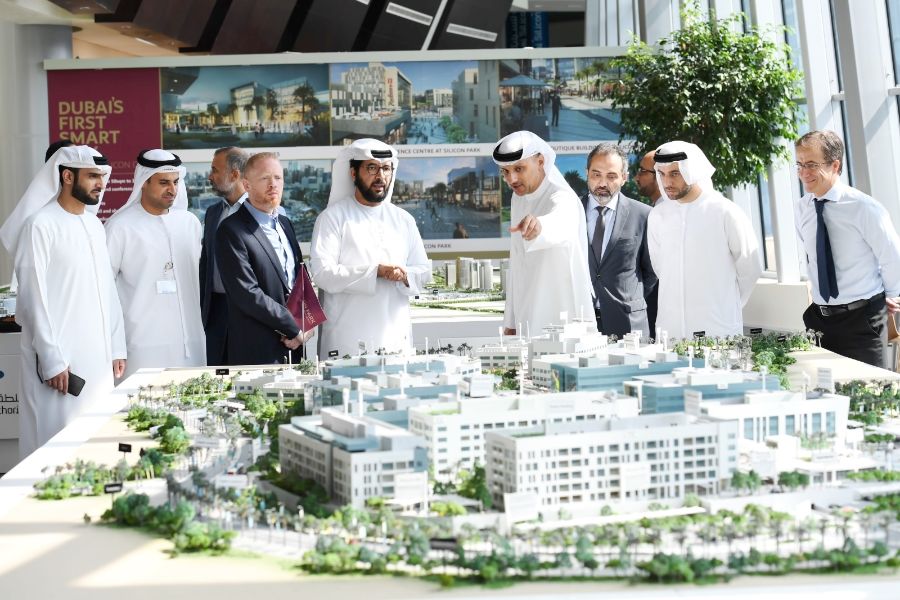
The Future 100
The UAE inaugurated the ‘Future 100’ programme, which will yearly recognise the top 100 startups that will enhance the country’s future preparation and the competitiveness of the UAE’s future economic sector. The UAE is eager to start proactive initiatives with a five-decade impact to promote its new, futuristic economic model in accordance with developing global economic trends. The Ministry of Economy continues to support innovative and creative future projects that enhance the UAE’s global leading position on competitiveness indices and promotes it as an attractive destination for future projects worldwide.
It strengthen the UAE’s position as a permanent centre for creativity and innovation, ensuring sustainable growth for the national economy and creating new jobs, particularly in industries related to new economic domains like space, renewable energy, Fintech, and artificial intelligence. According to the experts, improving future readiness is a fundamental pillar in the UAE government’s philosophy. As one of the primary priorities on the UAE government agenda, the initiative intends to assist new economic sectors that will shape the UAE’s future economy, particularly startups that contribute to the national economy.
Sandbox Dubai
Among the first projects to be implemented as part of the ‘D33’ economic plan are a unified Dubai commercial licence and centralised support for high-potential SMEs. The Dubai Unified Licence will offer all enterprises throughout economic zones a distinct commercial identity. Another initiative, ‘Sandbox Dubai,’ aims to establish the emirate as a key hub for incubating corporate innovation by facilitating the testing and commercialisation of new goods and technology. According to Sheikh Mohammed, the economic strategy includes 100 revolutionary projects.
Major priorities for the next decade
The Dubai Economic Agenda 2033 focuses on several key priorities for the next decade, including increasing the value added to the industrial sector and encouraging export growth, contributing to long-term economic growth, and achieving self-sufficiency in several key industries, such as manufacturing. Other important targets include making Dubai one of the world’s top five logistical hubs and one of the top four global financial centres. The Agenda also aims to boost Dubai’s economic productivity by 50% through innovation and digital solutions.
Furthermore, the Agenda aspires to integrate new generations of Emiratis into the private sector, transforming Dubai into a skilled worker hub, the fastest growing and most appealing global business centre, and an international hub for global multinational corporations (MNCs) and national SMEs.
Another significant aim of the ‘D33’ Agenda is to make Dubai one of the top and best three international tourism and business destinations by creating a globally competitive environment for business sustainability and lowering the cost of doing business in various sectors. The ‘D33’ agenda seeks to strengthen the city’s position as a rapidly rising and appealing business centre with world-class quality of life and secure the highest standards of safety and security for Dubai’s citizens and residents.
Emergence as a Global Education Hub in the Upcoming 10 Years

Dubai attracts more international students due to its positive international reputation, accessibility and location, and quality assurance – all of which are considered the primary factors for Dubai’s growth as a global education hub. The KHDA (Knowledge and Human Development Authority) has increasingly recognised the importance of integrating international students to foster a multicultural, dynamic, and global educational environment. Furthermore, Dubai aspires to become the world’s largest international centre of learning, culture, and education. Dubai has demonstrated to the world that it can become a top global economic centre. It is using this success to entice international students to come to the emirate to pursue higher education degrees. One of the main reasons why international students come to Dubai is its status as a world-class commercial and trading centre.
With one of the world’s highest quality of life and living standards, Dubai’s attractiveness as a commercial and tourism hub and a leading education destination will only grow. Location is also a significant aspect, and Dubai is becoming an increasingly appealing option because it is only eight hours away from two-thirds of the world. KHDA has established the University Quality Assurance International Board (UQAIB), comprised of top education professionals worldwide, to increase its capabilities further. Meanwhile, universities in Dubai would benefit from becoming more agile, which he defines as digitally enabled with a focus on the student journey, financially effective with data-driven decision making, and with high-quality partnerships in place to improve employability and research opportunities.